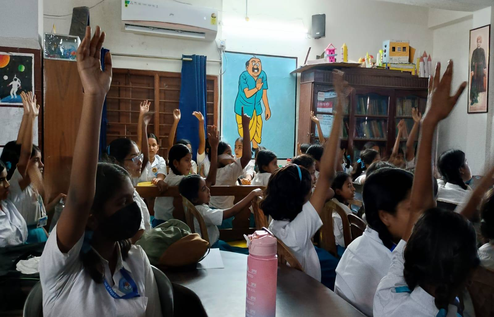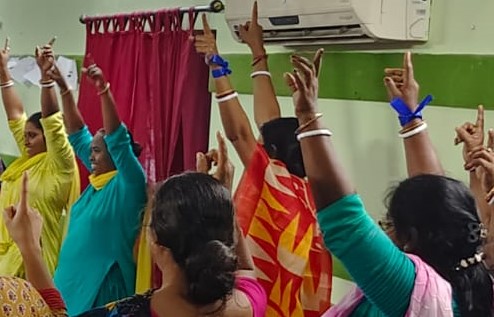
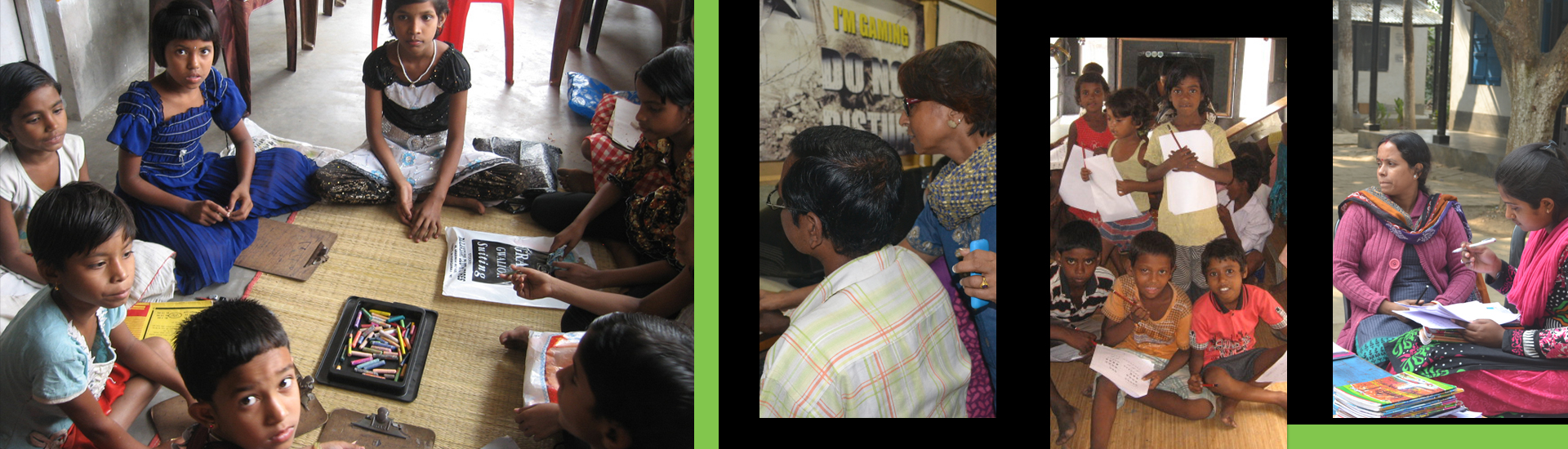
Case Study 1: Enter the World of Happy Schools…Meet the children of Kisholoy — where learning is all about mental enrichment to win the Exam of Life.
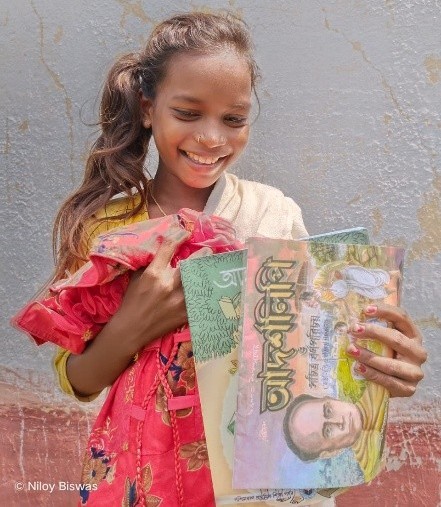
Sonamoni Sabar hails from Latpada village and lives with her parents, two sisters, and one brother. Her family belongs to an economically underprivileged background. Her father works as a daily labourer and struggled to make ends meet. Due to financial constraints and lack of awareness, Sonamoni’s father was not motivated to send her to school. As a result, Sonamoni remained out of the formal education system during her early childhood.
The turning point in Sonamoni’s life came when the representative of Change Initiatives from the Latpada Sabar School took a proactive role. Recognizing the importance of education for every child, the teacher personally reached out to Sonamoni’s family. Through regular communication, the teacher was able to successfully convince Sonamoni’s father about the long-term benefits of education. Eventually, Sonamoni was enrolled in school.
Today, Sonamoni stands as a symbol of transformation and hope. She is one of the most regular and punctual students at Latpada Sabar School. Her dedication is evident as she attends every class with enthusiasm and attentiveness. Teachers have noted her positive attitude and eagerness to learn.
Sonamoni’s case highlights the critical role that teachers and school outreach play in transforming the lives of children from marginalized communities. With timely intervention and support, Sonamoni was not only brought into the fold of education but has also emerged as a committed student. Her journey can inspire other families in the community to prioritize education, especially for girls.
Sonamoni’s story is a testament to how targeted motivation and community engagement can break the cycle of poverty and illiteracy. With continued support and encouragement, Sonamoni has the potential to become a changemaker in her community.
Sonamoni’s story is a testament to how targeted motivation and community engagement can break the cycle of poverty and illiteracy. With continued support and encouragement, Sonamoni has the potential to become a changemaker in her community.
Case Study 2: Empowering Dreams:Government Schools Get Coding & Tinkering labs.
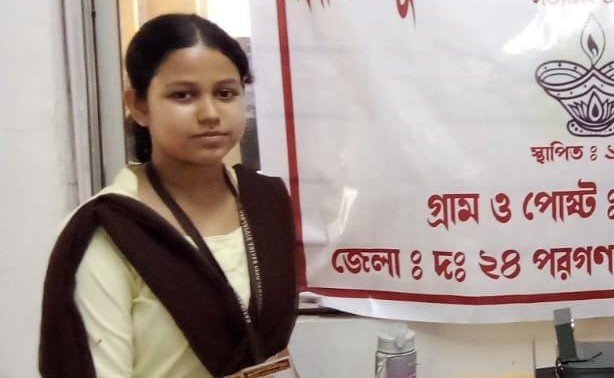
The Beginning: Upama Mondal is an inspiring young student currently studying in the eighth grade at Kalikapur Basantidevi Balika Vidyalaya. Her journey is not just a story of determination and resilience but also a testament to the transformative power of education and technology. .
Background: Upama's childhood was marked by adversity as she lost her father at a young age. Raised by her mother, sister, and grandmother, she faced financial constraints that could have limited her opportunities. However, Upama's thirst for knowledge and her unwavering spirit set her on a unique path of self-improvement and empowerment.
The Turning Point: Upama's life took a significant turn when she enrolled in the Change Initiatives’ Capgemini Let's Code project, a program aimed at teaching coding to students from underprivileged backgrounds. This initiative opened the doors to a world of opportunities for Upama, igniting her passion for coding and technology. Upama attended coding classes in the computer lab run by Change Initiatives regularly. Here, she was introduced to Scratch, a beginner-friendly programming language that allows users to create interactive stories, games, and animations. With dedication and enthusiasm, Upama quickly fell in love with preparing Scratch games.
Aspirations and Dreams: Upama's dreams soared beyond the confines of her circumstances. She aspired to become a pilot, a goal that many might deem unattainable. However, Upama saw the potential to merge her passion for coding with her dream of aviation. Her vision was to develop a simulation that would aid pilots in their training and decision-making processes.
The Power of Coding and Tinkering: Upama's journey reflects the power of coding education in transforming lives. By learning to code, she not only acquired a valuable skill but also developed problem-solving abilities, logical thinking, and creativity. These skills were instrumental in fueling her dreams and ambitions. She also prepared Anti Sleep Driving Glass with the help of coding and tinkering. She showcased this project which will be very helpful for the drivers in long journey.
Future Prospects: As Upama continues her education and coding journey, her dream of developing a pilot simulation may become a reality. With her dedication and the support of Capgemini Let's Code by Change Initiatives, she is well on her way to making a significant impact in the field of aviation.
Case Study 3: Basudha: Sunderban Women Join hands to Plant Mangroves and Replenish their Beautiful Land
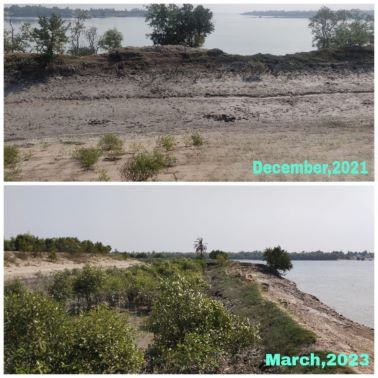
In the heart of the Sundarbans, where once lush mangroves stood tall and proud, there lay a somber tale of degradation. Years of manmade activities and relentless cyclones had left the forest battered and scarred. The delicate balance of this unique ecosystem was at stake, and the need for restoration was dire.
In this hour of need, Change Initiatives stepped forward. With a vision to breathe life back into the Sundarbans, we embarked on an ambitious project. Thanks to the generous funding from Schneider Electric, we aimed to reclaim the vacant lands of Chhotomollakhali and Kumirmari Gram Panchayats, transforming them into thriving mangrove forests.
The project's success hinged on community involvement, and Change Initiatives knew just how to achieve it. We teamed up with local Self-Help Groups (SHGs) members, who were intimately familiar with the land and its challenges. Together, we set out to plant 300,000 mangrove saplings.
The journey was not without its trials. The teams toiled tirelessly, often in the sweltering heat, nurturing each sapling with love and care. The local SHGs members provided valuable insights into the nuances of the ecosystem, helping to ensure the mangroves' survival. They battled adversity together, learning from each setback and growing stronger as a team.
Years will pass, and as the saplings grow into resilient mangrove trees, the Sundarbans will begin to breathe again. Birdsong will fill the air, and the once-threatened wildlife will slowly return to their natural habitat. The community will have a renewed sense of pride in their land, knowing they will have played a crucial role in its restoration.
The story of Chhotomollakhali and Kumirmari Gram Panchayats will no longer be one of degradation but of hope and resilience. Thanks to the unwavering determination of the Change Initiatives and the partnership with Schneider Electric, the Sundarbans were on the path to recovery.
The restoration of the Sundarbans served as a beacon of inspiration, reminding the world that when communities and organizations come together with a shared purpose, even the most damaged ecosystems can be revived, proving that nature, with a little help, can heal itself.
Case Study 4: Nabanna…Women empowerment through livelihood generation in non-traditional areas.
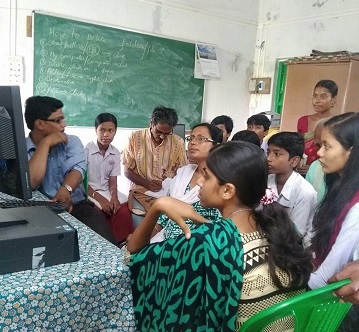
Background: In Balarampur village under Sonarpur Block of West Bengal, many women are engaged in backyard poultry farming to support their families and earn additional income. With support from the Indian Veterinary Research Institute (IVRI), women have been raising chickens and gaining knowledge on poultry care. However, due to limited infrastructure and resources, their income from poultry remained low.
Introduction of the HER+ Learning Lab: In 2023, a new project called the IRRI HER+ West Bengal Learning Lab was introduced in Balarampur. The project is supported by the International Rice Research Institute (IRRI) and implemented by Change Initiatives. Its goal is to improve the livelihoods of women farmers by providing better tools, training, and capacity-building opportunities. The project focuses on enhancing women's knowledge through digital literacy, gender awareness, and leadership training, while also supporting practical livelihood improvements like poultry farming.
Bimala Dewan’s Story: One of the most inspiring participants in the project is Bimala Dewan. She is unmarried and has been raising chickens since childhood. Before the project, Bimala had a small bamboo cage where she kept around 10 to 12 chickens. Although she worked hard, her income from poultry was very limited due to the small size of the cage and lack of proper support.
When the HER+ Learning Lab began its work in Balarampur, Bimala was selected to receive one of the four improved poultry cages provided during the first phase. The cage she received is a two-layered structure, capable of holding up to 50 chickens. It is safer, more hygienic, and easier to manage than the traditional bamboo cages.
After receiving the new cage, Bimala’s confidence increased. She bought more chicks and now raises around 32 chickens. She plans to sell 15 chickens for meat and keep the remaining 17 for egg production, which will help generate a steady income. Her earnings have improved, and she feels proud and hopeful about expanding her poultry work further. In addition to the infrastructure support, Bimala also took part in training sessions on digital literacy, gender equality, and leadership under the project. These sessions helped her become more confident, aware, and capable of managing her small enterprise independently.
Conclusion: Bimala Dewan’s journey shows how small but meaningful support — such as better infrastructure and the right training — can bring about big changes in the lives of rural women. Through the HER+ West Bengal Learning Lab, Bimala has not only improved her poultry business but has also become one of the most active and inspiring members of the project. Her story is a powerful example of how empowering women with knowledge and resources can lead to stronger, more self-reliant communities.